Getting dressed well throughout the year is less about buying a new wardrobe each season and more about choosing useful layers. The weather can change between a cool morning commute and a warm afternoon, so flexible pieces earn their place. How To Style Clothing For Different Seasons starts with noticing local conditions, daily routines, and how different fabrics feel against the skin. A cotton shirt beneath a light cardigan works for a breezy spring day; a compact rain jacket helps when clouds arrive. Small choices matter.
In summer, breathable cotton or linen, relaxed fits, and sun-protective accessories can make hot days more comfortable. In autumn, try adding a knit sweater, a scarf, or a water-resistant coat over familiar basics. Winter calls for warm layers, including thermal pieces, wool socks, and footwear suited to wet or icy conditions. Check care labels before washing delicate fabrics, and store off-season clothing clean and dry. These practical habits help clothes last longer.
A useful seasonal wardrobe does not need to follow every trend. Start with items you already wear, then fill genuine gaps, such as a warmer mid-layer or a lighter top. Fit and comfort matter as much as appearance. And, honestly, not every outfit will feel right on the first try. Keep a note of what felt too warm, too loose, or inconvenient, and adjust next time. The goal is simple: dress for the day ahead, while leaving room for weather to surprise you.
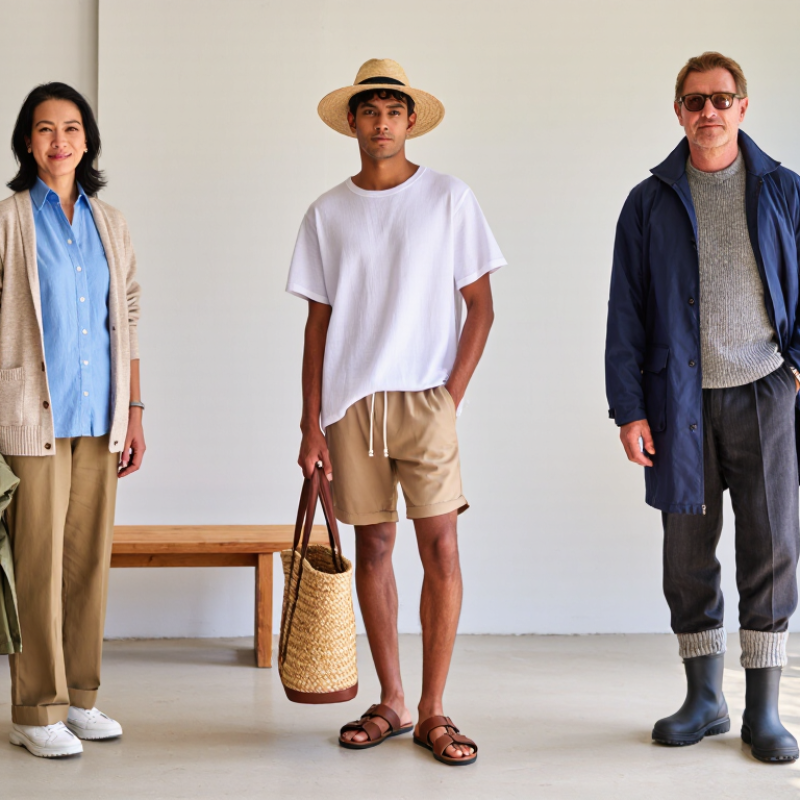
Assess the Weather, Setting, and Comfort Needs
Seasonal dressing works better when you check conditions for the hours you’ll be outside, not just the day’s high.
The National Weather Service’s Heat Index chart places 80°F in its “Caution” range, where heat may affect outdoor activity. Humidity can make a short walk feel surprisingly uncomfortable. Choose breathable layers, and avoid tight cuffs that trap warmth.
Small details matter.
Match clothing to the setting, too.
A windy transit stop, shaded trail, and warm office can call for different layers on the same day. Check wind, rain, and UV levels before leaving. The World Health Organization’s Global Solar UV Index guide recommends sun protection at index 3 or higher. A brimmed hat and long sleeves may help more than another insulating layer.
Comfort depends on movement as well as temperature.
Sit, reach, and climb stairs in an outfit before relying on it for a full day. Fabric claims can be useful, but fit and ventilation matter just as much. It is easy to overdress for a forecast high, then feel too warm indoors. Try a thin base layer, a removable middle layer, and a weather-resistant outer layer. If rain is possible, check footwear and seams, not just the jacket.
Choose Versatile Basics for a Year-Round Wardrobe
Choose versatile basics for a year-round wardrobe by focusing on fit, comfort, and easy layering. A cotton T-shirt, a light shirt, straight-leg trousers, and a simple knit can work across several seasons. In warm weather, wear them alone with breathable fabrics and roll-up sleeves. When temperatures drop, add a thin base layer, a cardigan, or a coat. Neutral colors make mixing easier, though one favorite color can keep the outfits from feeling dull.
Tips: Check how a garment feels over a thin layer before buying. Keep a compact umbrella and a light scarf near the door for changeable weather. Wash knitwear gently and let it dry flat to help it keep its shape.
Think about your local climate, too. A heavy coat may be useful for months in one region and rarely needed in another. Store only the pieces that truly leave your regular rotation; otherwise, useful basics can disappear into crowded drawers.
I still misjudge transitional weather sometimes. A light layer in a bag is often more practical than dressing for a perfect forecast. A wardrobe should make getting dressed simpler, not require a rigid set of rules.
Dress for Spring and Summer with Light Fabrics and Layers
Spring and summer weather can shift between a cool morning and a warm afternoon, so build outfits in removable layers. Try a cotton shirt over a light tank, with a thin cardigan folded into your bag. Linen trousers or a loose cotton skirt allow airflow and feel comfortable in heat. Keep the base layer simple. Add a light overshirt when the breeze picks up, then remove it indoors. I sometimes choose a layer that looks right but feels too warm by noon; a short walk outside is a useful test.
Fabric choice also has a wider impact. Textile Exchange’s Materials Market Report 2024 estimates that global fiber production reached 124 million tonnes in 2023, with polyester making up about 57 percent. That figure describes production, not how comfortable a garment feels, so check the fabric label and construction. A loose weave, roomier cut, and lighter-weight fabric can help an outfit feel less restrictive on hot days. For changeable weather, pair a breathable base with one easy-to-carry layer, rather than several heavy pieces. Keep it practical. A pale shirt may show spills more easily, and I still forget that sometimes.
| How to Style Clothing for Every Season: Light Fabrics and Layers for Spring and Summer |
| Season and Conditions |
Comfortable Fabric Choices |
Lightweight Layer |
Outfit Formula |
Practical Styling Tip |
Early Spring
Cool mornings, mild afternoons |
Cotton, cotton poplin, and lightweight denim |
Fine-knit cardigan or unlined cotton jacket |
Cotton shirt, straight-leg trousers, and a removable cardigan |
Choose layers that are easy to take off as the day warms up. |
Late Spring
Changeable temperatures |
Linen-cotton blends, breathable cotton, and lightweight knitwear |
Open-weave cardigan or light overshirt |
Breathable top, midi skirt or relaxed trousers, and a light overshirt |
A woven outer layer adds coverage without the warmth of a heavy coat. |
Early Summer
Warm days, cooler evenings |
Linen, cotton voile, and lightweight cotton jersey |
Thin cotton shirt worn open or a fine shawl |
Sleeveless cotton top, airy wide-leg trousers, and an open shirt |
Keep an extra layer handy for indoor spaces with strong air conditioning. |
Midsummer
Hot, sunny weather |
Lightweight linen, breathable cotton, and other airy woven fabrics |
Loose, lightweight shirt for shade or indoor comfort |
Relaxed linen shirt, breathable shorts or skirt, and comfortable sandals |
Roomier fits allow airflow; a lightweight layer can also provide sun coverage. |
Style Autumn and Winter Outfits with Warmth and Texture
How to Style Clothing for Every Season?
Style Autumn and Winter Outfits with Warmth and Texture
Cool-weather outfits work best when warmth comes from thoughtful layers, not simply piling on more clothes. Start with a breathable base, such as a cotton or merino top, then add a cardigan or overshirt. A wool coat can provide a final layer for colder days. Leave enough room for movement; tight layers can feel uncomfortable and may trap less warmth than expected.
Texture adds depth without needing bold colors. Try pairing a ribbed sweater with smooth trousers, or a brushed scarf with a firm denim jacket. Earthy shades—rust, olive, charcoal, and cream—often sit naturally together in autumn and winter. Keep one piece lighter or softer to prevent a heavy-looking outfit. Small details matter: rolled cuffs, a visible shirt collar, or a scarf tucked loosely at the neck can make layers feel intentional.
I used to choose thick knits for every cold morning, then overheat indoors. That did not always work. Now I check the day’s temperature and consider how much time I’ll spend outside. On wet days, a water-resistant outer layer and shoes with dependable grip are practical choices. Wool can feel warm, but it may need careful washing; check the garment label before cleaning. A slightly rumpled scarf is fine. Comfort should still come first.
Adapt Colors, Footwear, and Accessories to Each Season
Spring colors feel fresh when they echo what is already outdoors. Try soft green, pale blue, or warm cream with a light jacket. Choose shoes that handle damp sidewalks, such as comfortable water-resistant flats or boots. A thin scarf adds color without trapping too much heat. Small changes matter.
In summer, lighter fabrics and brighter shades suit long, sunny days. A linen shirt in coral or white pairs easily with breathable sandals. Bring a hat and sunglasses for shade, and carry a light layer for cool indoor spaces. I once dressed for the forecast and forgot about air conditioning. It was not my best plan.
Autumn invites deeper colors: rust, olive, and burgundy work well with denim or knitwear. Ankle boots offer more coverage as temperatures drop, while a textured bag or wool scarf adds warmth. In winter, layer neutrals with one vivid accent, such as a red hat. Choose insulated footwear with a steady sole for cold, wet streets. Check the weather before leaving; a stylish shoe can be a poor choice on icy pavement. My own color combinations sometimes miss the mark, so I test them in daylight before committing.
How to Style Clothing for Every Season
Adjust your color palette, footwear, and accessories as the weather changes.
How to read this: Scores show suggested styling emphasis on a 1–5 scale, not survey results. Use them as a practical guide: lean into lighter colors in summer, and prioritize weather-ready footwear and accessories in colder seasons.
Conclusion
How To Style Clothing For Different Seasons begins with considering the weather, your plans, and the level of comfort you need throughout the day. Build a year-round wardrobe around versatile basics that can be mixed and matched, then adjust each outfit with thoughtful layers. In spring and summer, choose lightweight, breathable fabrics and add a layer that can be removed when temperatures rise or conditions change.
For autumn and winter, combine warmer materials and varied textures to create comfortable outfits suited to cooler days. Seasonal colors can help reflect the mood of the weather, while practical footwear and accessories add both function and personal style. By adapting fabrics, layers, colors, shoes, and accessories as the seasons shift, you can make the most of your existing wardrobe and feel comfortable in a range of settings.

 VEIL Fashion